
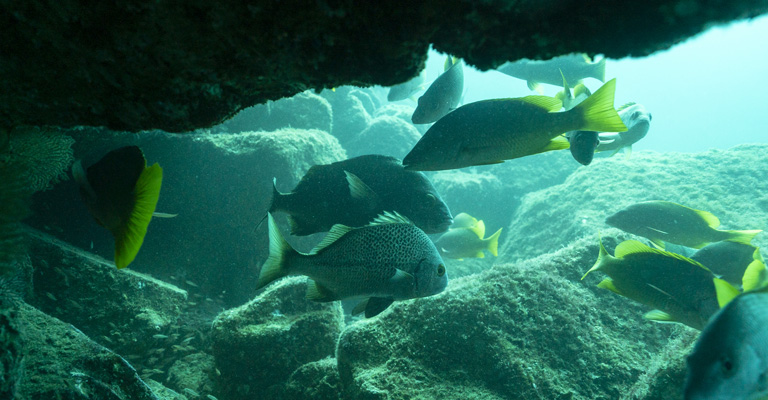
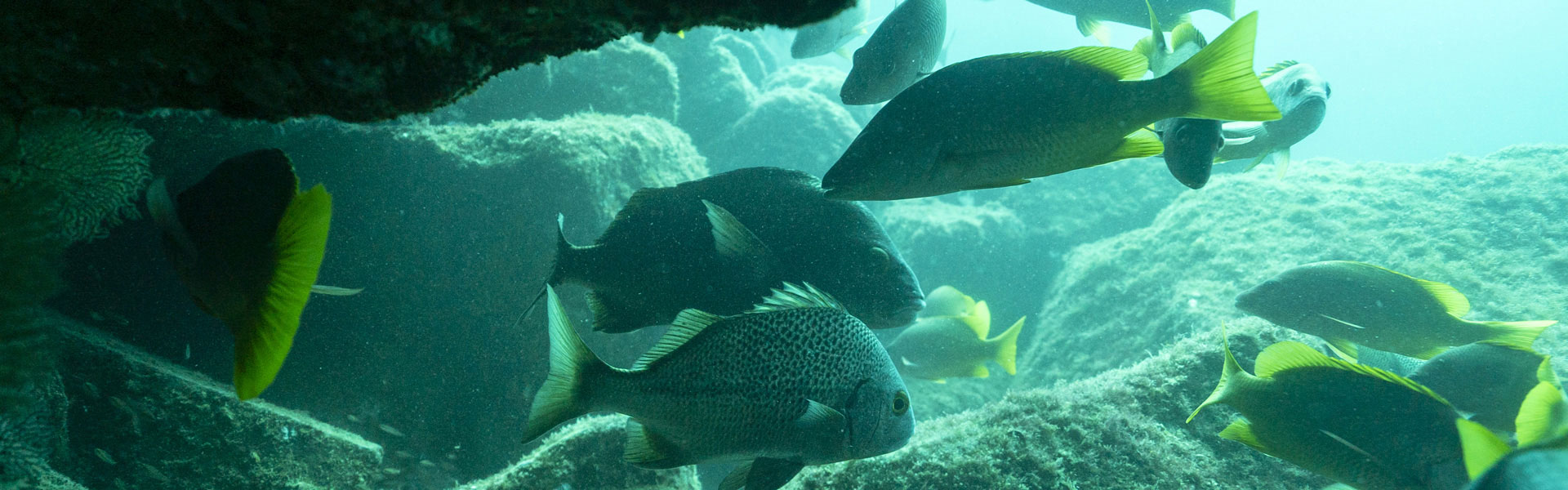
Fishing Refuges in Baja California Sur.
Sociedad de Historia Natural Niparajá is dedicated to conserving habitats, natural resources, and priority ecological processes in Baja California Sur.
INTRODUCTION
The coastal-marine strip between the cities of Loreto and La Paz in Baja California Sur, known as the “San Cosme to Punta Coyote Corridor,” is ecologically significant due to its biodiversity and the state of conservation of its biological resources. An important fishery operates in this region, consisting of 10 fish species and supporting over 650 people.
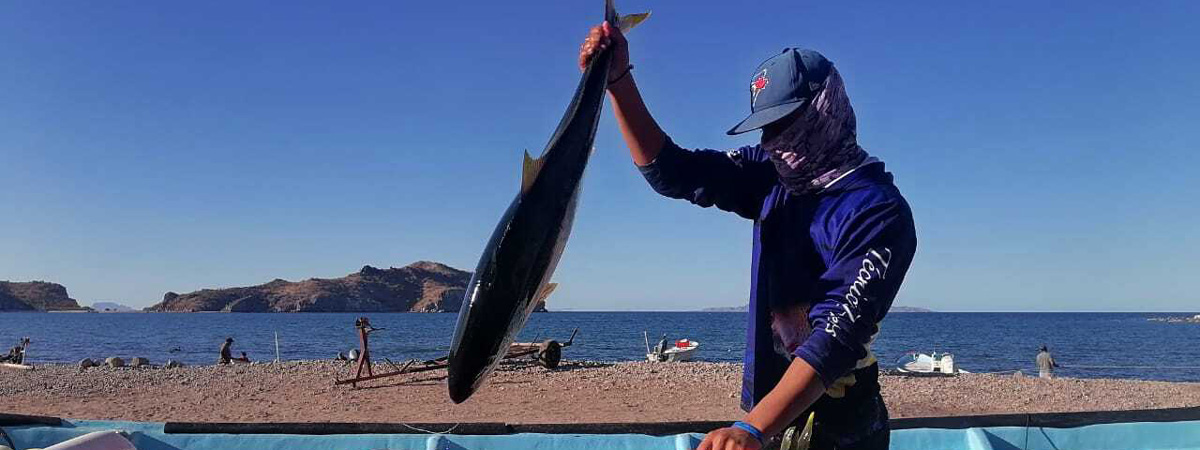
More than 12 years ago, fishers from the Corridor requested the establishment of a network of Fishing Refuge Areas to preserve the fish populations their communities depend on. Since then, Sociedad de Historia Natural Niparajá has led efforts and supported residents from 10 communities in the Corridor to strengthen the operation of this refuge network.
OBJECTIVE
Sociedad de Historia Natural Niparajá, in collaboration with local communities, works to make the region a model for finfish fishery management, as well as for the operation and enforcement of the network of Fishing Refuge Areas.
MAIN ACTIVITIES
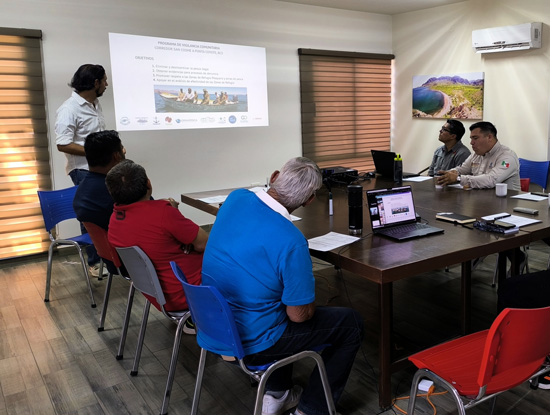
- Training community leaders in scientific and fishery monitoring, diving, and inspection and surveillance topics.
- Underwater monitoring of the Fishing Refuge network with the participation of community divers.
- Fishery monitoring of 8 commercially important fish species by local fishery technicians in Corridor communities.
- Implementation of a community surveillance work plan.
RESULTS AND ACHIEVEMENTS
- Community leadership: A group of 55 people has been formed to promote sustainable use of fishery resources in local communities and to share best practices so they can be adopted in other regions. Additionally, 12 members of this group have been trained as diver monitors to assess the condition of the Fishing Refuge Areas and ensure sustainability.
- Underwater monitoring: Since the creation of the refuge network in 2012, annual monitoring has been conducted to evaluate its impact and adjust strategies. Ten years after their establishment, biomass, size, and abundance of at least three commercially valuable species have remained stable or increased within the refuges. Based on these findings, the refuge areas were renewed and expanded in 2022.
- Global recognition: Due to the strong community-led work, and after 10 years of monitoring, the FAO will include this data in its 2026 Global Report on Fisheries and Aquaculture.
- Community surveillance: With support from CONAPESCA and PROFEPA, the participation of community watchers has been strengthened to support enforcement efforts. Members were trained in using technology for reporting and tracking illegal activities through a radar system in Loreto National Park.