
Fishing Refuges in Yucatán
Comunidad y Biodiversidad is an organization focused on promoting marine biodiversity conservation and the establishment of sustainable fisheries through effective community participation.
INTRODUCTION
Small-scale fishing is vital for more than 6,000 people engaged in fishing in Yucatán, providing livelihoods, food, employment, and preserving local culture. Over the past decade, overexploitation of octopus, lobster, sea cucumber, and fish such as grouper has been reported. This has had serious consequences for both marine ecosystems and the communities that depend on them.
Fishing Refuge Areas Areas represent a key strategy for the sustainable management of fishery resources, marine conservation, and climate change adaptation. In these areas, fishing activity is regulated and restricted, allowing for the recovery and maintenance of species populations that are fundamental to marine balance.
OBJECTIVE
The organization Comunidad y Biodiversidad collaborates with 10 fishing communities along the Yucatán coast to design and manage fishing refuge areas areas to help recover key species such as octopus, sea cucumber, lobster, groupers, and snappers, as well as the region’s rocky reefs.
MAIN ACTIVITIES
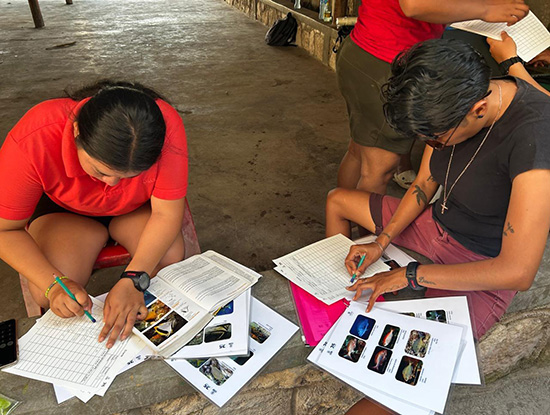
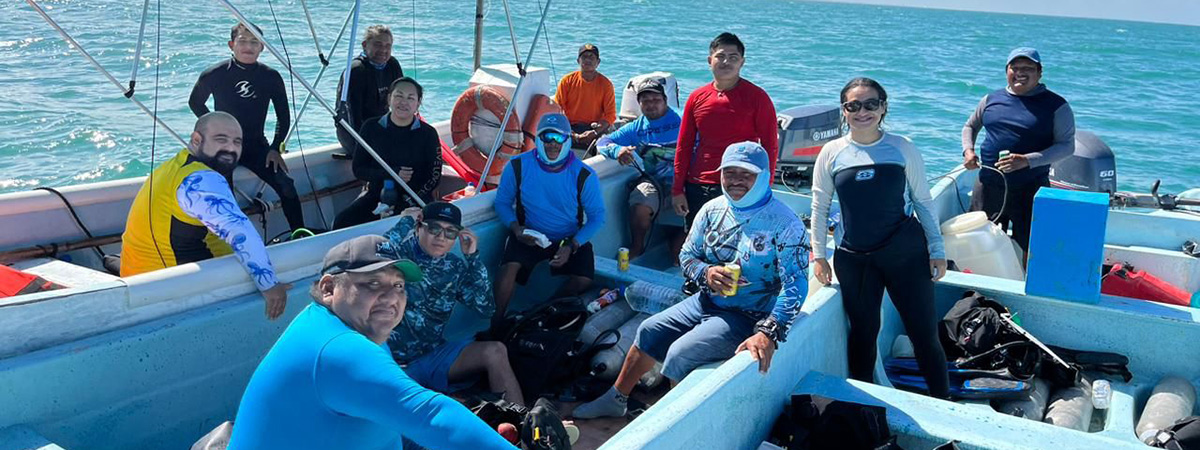
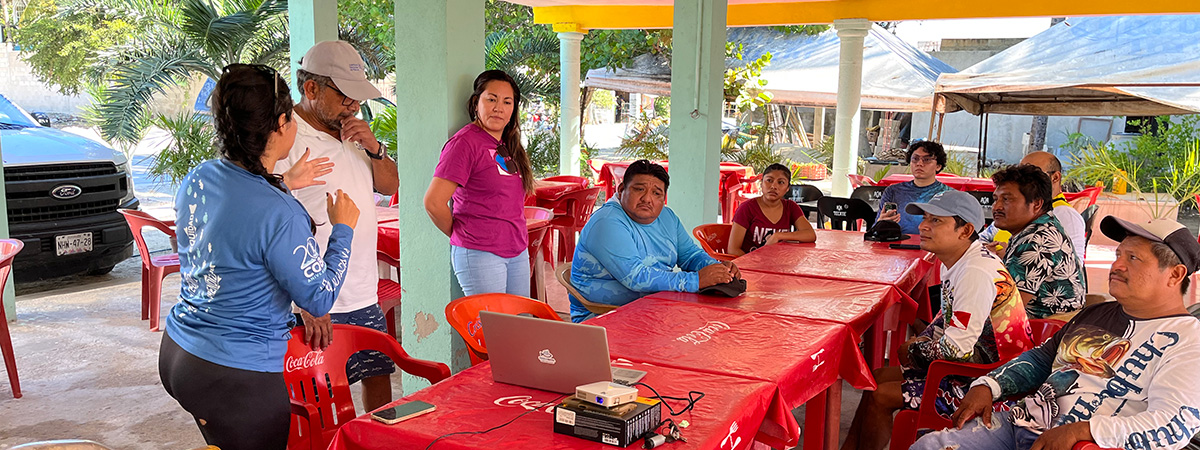
- Training male and female fishers in community leadership, diving, and underwater monitoring.
- Creating a collaborative information system on ecological balance to support decision-making among fishing communities, civil society organizations, and government authorities.
- Managing new fishing refuge areas focused on conserving and restoring rocky reefs as essential habitats for marine species.
RESULTS AND ACHIEVEMENTS
- Over 30 fishers, including women, trained in underwater monitoring and community leadership, promoting more active participation of women and working toward a more inclusive and equitable fishing sector.
- Monitoring conducted at 90 sites along the Yucatán coast, recording 23 invertebrate species and 79 fish species, generating key data for fisheries management.
- In 2024, community leaders submitted proposals to create two new refuge areas, benefiting more than 750 fishers and 4,700 residents who depend on fishing and tourism.
- Dialogue spaces have been established for sharing experiences within and between communities, enabling each one to learn from others’ successes and challenges and to find effective ways to implement solutions tailored to their own needs.